

Overview
This project involved designing an instructional prototype that teaches users how to complete a task in Airbnb — specifically, how to add a home to an existing wishlist. The prototype was built in Figma and guided by laws and principles of user interface design and cognitive psychology to ensure the interface was intuitive, memorable, and easy to follow.
Design Rationale
Many design choices in this project were intentional and informed by specific UI principles and psychological concepts. My partner and I put together a document that described how we planned to use each principle in the final design. Click the link below to explore how each UI principle was considered and applied in more detail.
View Full Design RationalePrinciples in Action
A closer look at three key principles and how they were applied directly in the interface.
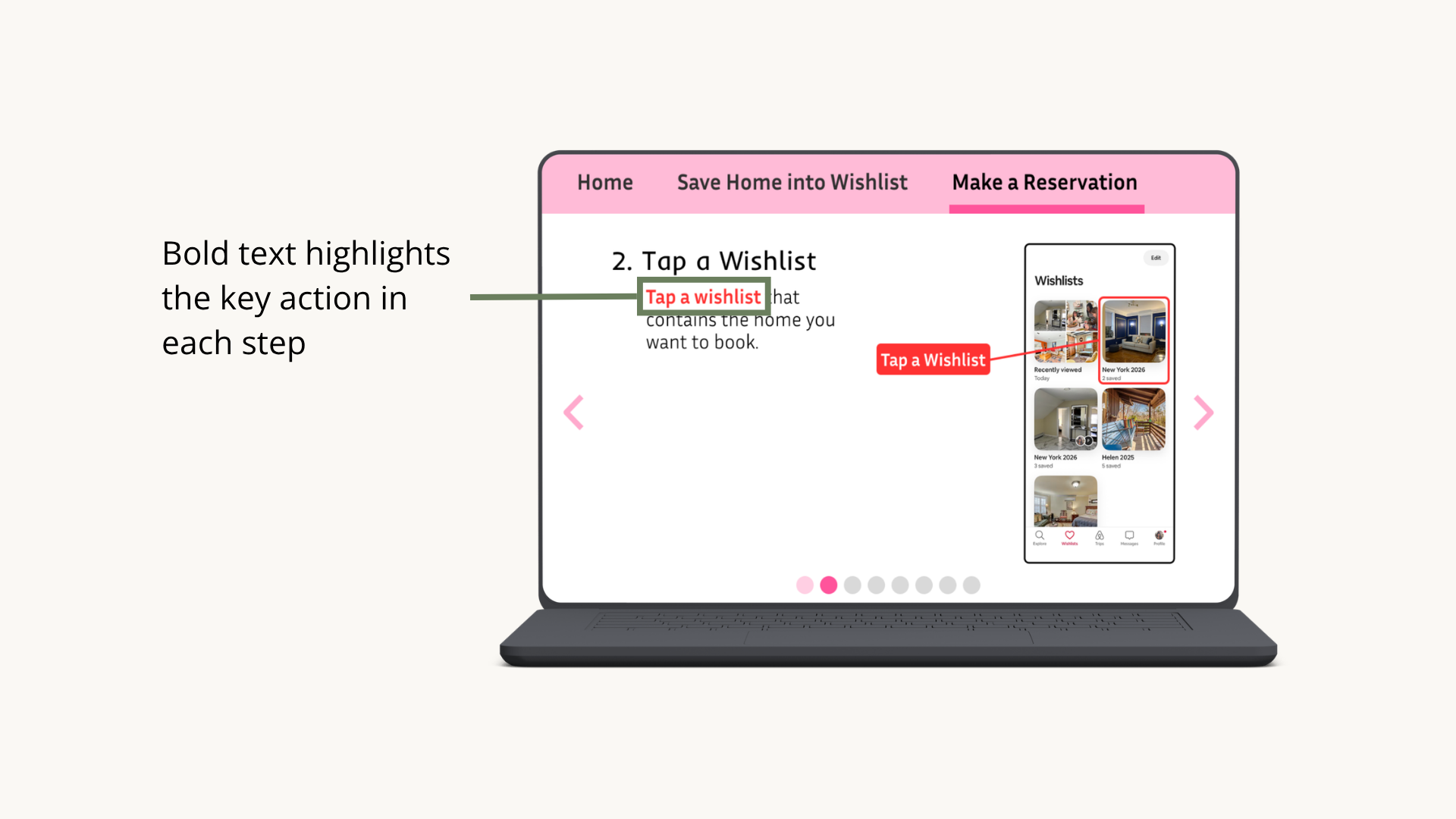
The Von Restorff Effect
Among similar items, the one that differs most is more likely to be remembered. Key instructions within each step's explanation were visually distinguished through contrast, making the most important details easier to remember.
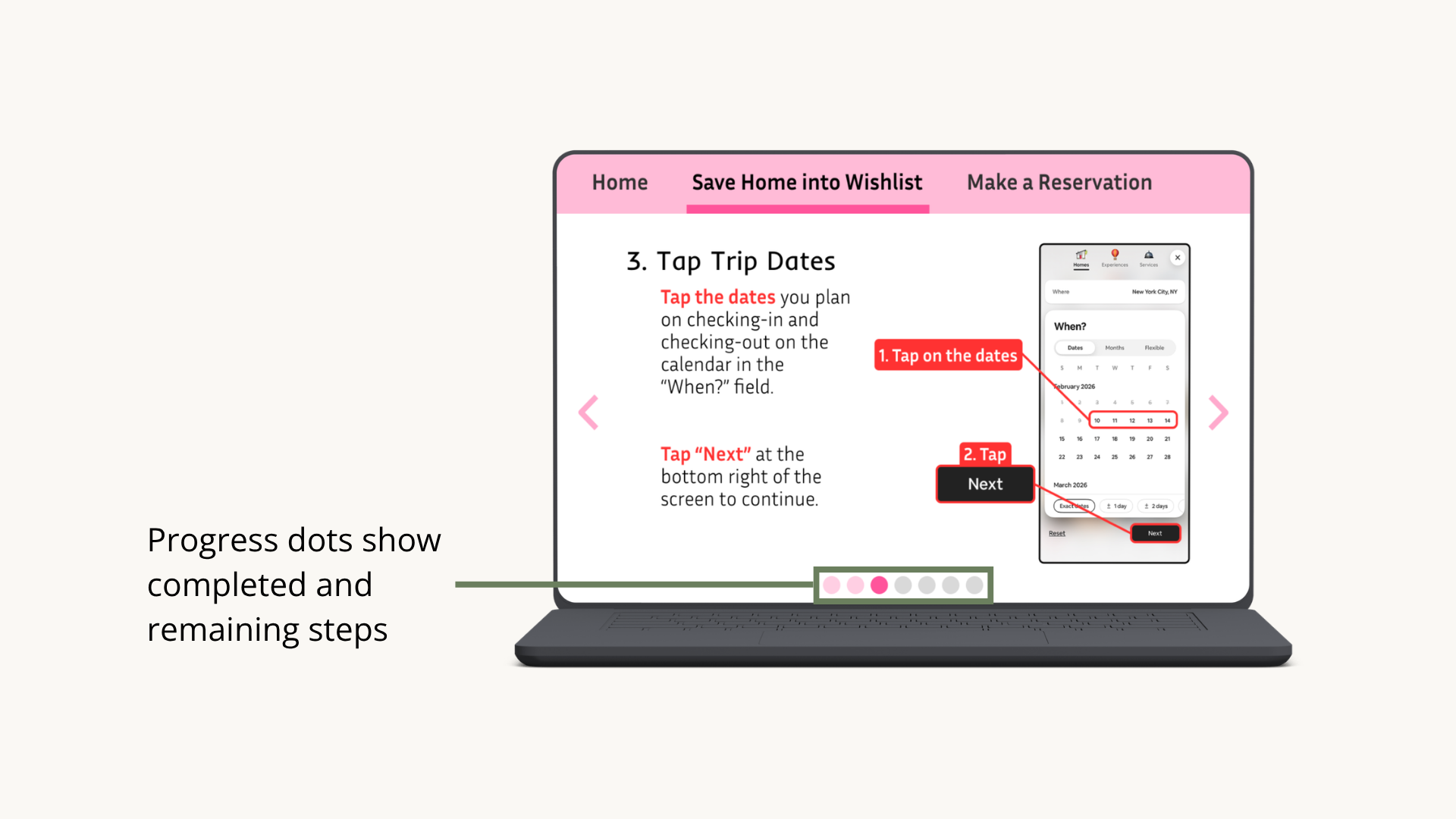
The Zeigarnik Effect
People tend to recall incomplete tasks more than completed ones. Progress indicators at the bottom of each slide display both completed and remaining steps, keeping unfinished work mentally present and encouraging users to complete the sequence.
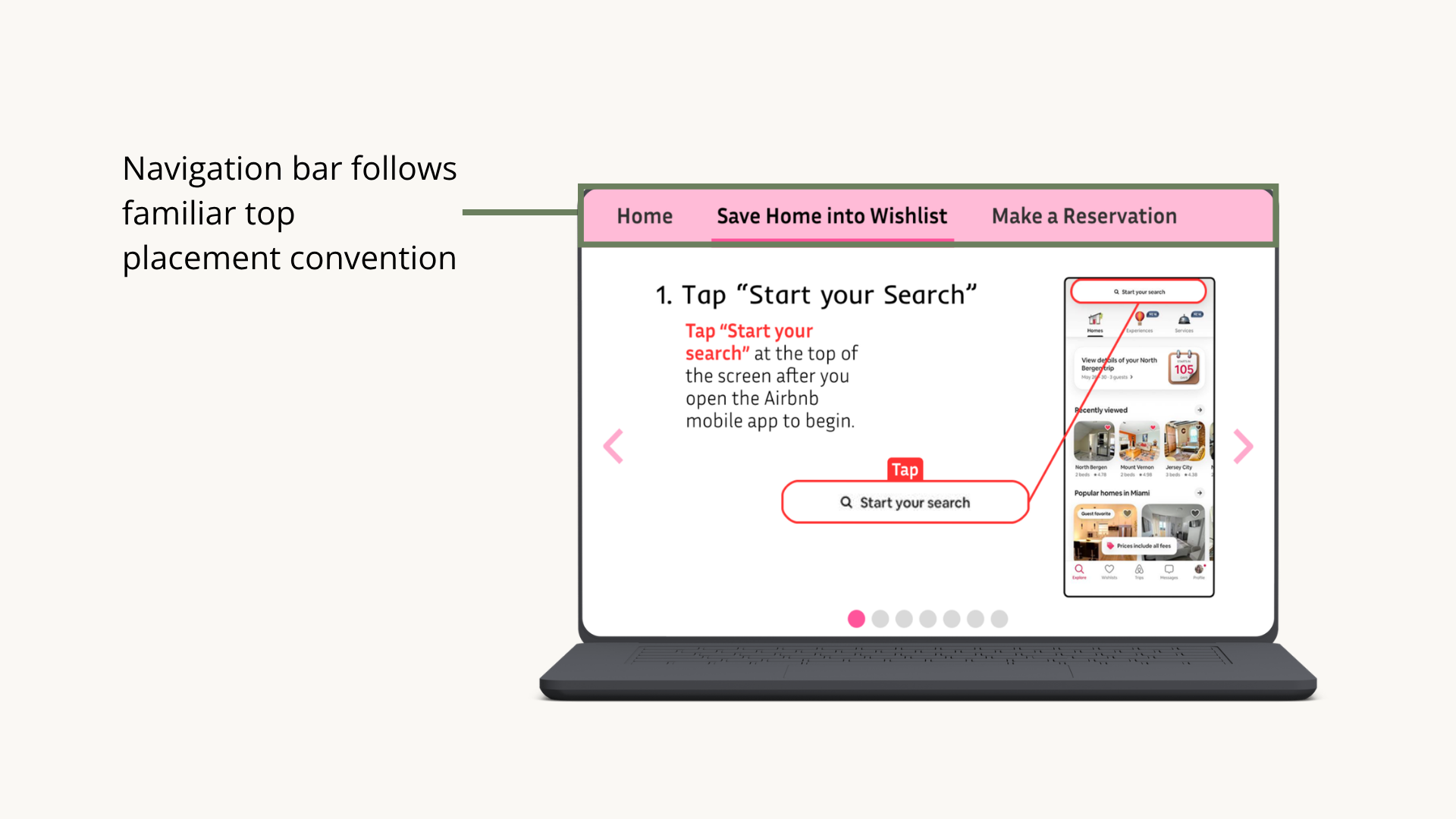
Jakob's Law
Users prefer websites that function similarly to those they are already familiar with. The navigation bar was placed at the top of each step, and back/forward arrows follow common left/right conventions, matching familiar navigation patterns.
Interactive Prototype
View the full instructional prototype in Figma.